
Marriage equality and how I became the two of spades

Much of my political work has involved fighting for constituency groups ignored, maligned, or discriminated against by those in power. One of the most memorable instances was in 1996, when I spoke out before the Iowa House against a proposed ban on same-sex marriage. That speech landed me an invitation by US Rep. Barney Frank to testify before a congressional committee.

Amusingly, my advocacy also landed me in a deck of cards published by the National Gay and Lesbian Task Force. That is seriously an honor I’ll always cherish.

Those two speeches opened a host of opportunities for me, including three pages of quotes in Evan Wolfson’s book, Why Marriage Matters. 

The question of whether or not marriage equality is threatened is my topic during the first segment of this week’s program. Short answer: No, it’s not. The fight for equality has shifted to our trans brothers and sisters, and to defending women against legislative assaults on their autonomy. Depending upon the outcome of the November 8 election, those two fights may take several turns for the worse.

Continue Reading →

Carbon offsets: Greenwashing on steroids

I’ll cut to the chase: Carbon offsets are a scam and the glowing language in corporate ads is mostly bunk. Comedian and news commentator John Oliver does a bang-up job analyzing and eviscerating offsets. It’s worth watching all 23 minutes of Oliver’s program (language alert to those sensitive to such things … sorry, Mom).

If you want a shorter but less colorful dig into carbon offsets, that’s the first topic Charles and I tackle on this week’s program.

I know, the idea sounds glorious. A corporation negates its carbon-spewing ways by planting trees or putting up windmills. Yet as Oliver points out, “study after study has indicated that most offsets on the market don’t reliably reduce emissions.”

It’s not just corporations engaged in this brand of greenwashing. Individuals can also assuage their climate guilt. Some airlines let you offset 1,000 miles of travel for a mere $2. You can also offset the carbon footprint of your pet: 50 cents per hamster, $6 per cat, and $10 per pet pig. If you think it’s getting kind of silly, then we agree. Continue Reading →

Schools, heat, climate org infighting, and food for the New Climate Era

Schools open amidst new challenges. Margaret Buckton, president of the Urban Education Network, joins me. Between school shootings, the residual impact of pandemic lockdowns, and Republican legislatures going nut job on K-12 schools, nearly 600,000 teachers have quit or retired across the US.

In Iowa, Senate President Jake Chapman kicked off the 2022 session by asserting that Iowa teachers had a “sinister agenda.” I guess you have to believe that to justify book bans, prevent teaching the history of racism, micromanage teachers’ work, and further degrade public education by shifting funds to private schools. Continue Reading →

Carbon sequestration done right

My guest is June Sekera. She’s a public policy scholar and researcher whose most recent work focuses on carbon sequestration, including the discovery that subsidies for “mechanical” carbon removal emit more CO2 than they remove.

If you follow my blog, talk show, and podcast, you’re no doubt aware that CO2 pipelines are in the “wrong” category of carbon sequestration. As June points out, “such projects claim they will reduce CO2 emissions by 90 percent when in reality they capture as little as seven percent. In many cases, they actually increase CO2 emissions because of the extra energy required to power the machinery that captures and compresses the CO2. In addition, most of the CO2 currently captured is used for enhanced oil recovery, thereby defeating the purpose.”

The truth is there’s not a high-tech carbon-capture scheme that works, including the “Orca” direct-air carbon-capture plant in Iceland. That costly initiative — much heralded by businesses and governments — is prohibitively expensive, could take decades to operate at scale, and ironically was delayed due to poor weather conditions.

Oh, and the world would need eight million “Orcas” to accomplish the necessary CO2 removal! Continue Reading →

The Nuclear Threat

I really hate talking about this, and I imagine you do, too. But let’s be adults. Humanity has a nuclear weapons problem that could wipe out everything — yes, everything! Americans were more woke (yeah, I said woke) about the nuclear threat back in the 1980s.

Real change was accomplished at that time, including a ban on nuclear testing, in large part because of the huge global, grassroots movement to end the nuclear arms race.

It was fear of nuclear war that compelled me to become politically active in 1984. I was farming my family’s ancestral land in Ireland that year. In between planting potatoes and making hay, I participated in protests organized by Irish Campaign for Nuclear Disarmament against then-president Ronald Reagan’s unsuccessful proposal to station nuclear missiles in Ireland. Continue Reading →

Psychologist: It’s ok if disruptive climate activists aren’t popular

Margaret Klein Salamon and I worked together in 2015 before the Iowa Caucuses, organizing volunteers to bird-dog Democratic and Republican presidential candidates to raise the profile of climate change. Our campaign never employed civil disobedience, but a handful of us did get thrown out of a Trump rally sporting signs and chanting “MOBILIZE NOW.”

Margaret appeared in a recent NY Times story, “These Groups Want Disruptive Climate Protests. Oil Heirs Are Funding Them.” She’s a clinical psychologist, founded The Climate Mobilization, and wrote Facing the Climate Emergency: How to Transform Yourself with Climate Truth. She now directs the Climate Emergency Fund, which supports many climate organizations, some that employ civil disobedience.

Margaret contends that civil disobedience — or “disruption,” as it’s sometimes called — is necessary to shock people out of the delusion that what we’re experiencing with climate change is normal and acceptable. Continue Reading →

Do Climate Bill’s weaknesses outweigh strengths?

There’s an excellent article in The Guardian this week, giving voice to some of the countervailing viewpoints on the Climate Bill. It’s titled “Landmark US climate bill will do more harm than good, groups say.” I highly recommend you read it, and I’d greatly appreciate your feedback.

Some of the article’s highlights:

[T]he bill makes a slew of concessions to the fossil fuel industry, including mandating drilling and pipeline deals that will harm communities from Alaska to Appalachia and the Gulf coast and tie the US to planet-heating energy projects for decades to come.

Siqiniq Maupin, executive director of Sovereign Iñupiat for a Living Arctic, said: “This new bill is genocide, there is no other way to put it. This is a life or death situation and the longer we act as though the world isn’t on fire around us, the worse our burns will be. Biden has the power to prevent this, to mitigate the damage.” Continue Reading →

Renewable energy’s rare earth mineral challenge

Charles Goldman co-hosts this week. Later in the program, we discuss the crazy exodus of teachers from K-12 public schools. We also talk about Sen. Joe Manchin’s political death-bed conversion on climate, sort of.

But first, we kick it off with Rob Hach, CEO of Trusted Energy. Rob’s company is launching a huge solar project at Grinnell College, in Iowa, and we get an update on that. Then we discuss renewable energy’s vulnerable underbelly: rare earth minerals. Continue Reading →

An 81,000-mile journey on “muscle fuel”

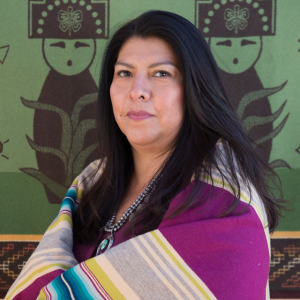
My first guest is Dr. Corrine Sanchez, executive director of Tewa Women United (TWU). TWU was founded in 1989 as a support group for Native women in New Mexico dealing with “the traumatic effects of colonization, religious inquisition, and militarization leading to issues such as alcoholism, suicide, domestic/sexual violence, and environmental violence.”

Corrine is from the San Ildefonso Pueblo north of Santa Fe. Her Pueblo is one of eleven Native communities who extended kindness to participants in the Great March for Climate Action in 2014. It’s safe to say that, without their help, the March wouldn’t have made it across New Mexico. Continue Reading →

Learn to love and protect plankton

Given the prominence this week of news stories about heat and wildfire, you might have missed another critical story: last week’s stunning discovery about the decline of plankton in the Atlantic Ocean. (I missed it until John Davis alerted me. Thanks, John.)

How big a decline? At the current rate of loss, 90% of plankton will be gone by 2045! That’s huge, imminent, and frightening.

Why frightening? Because plankton is the foundation of the oceans’ food chain. If 90% of it dies off, the majority of salt-water aquatic life won’t be far behind. And even those of us living in the middle of a continent can’t survive without viable oceans. Continue Reading →